Computer Vision Syndrome
A decade or two ago, computer vision syndrome would have sounded like a parody, but in this age the number of people spending more time staring at electronic devices has increased dramatically. Visual displays (computers, laptops, smart phones, tablets, and Kindles) contribute to our lives in both work and leisure, to the point where children are also affected as they spend many hours of the day using these devices for learning, homework, play, and communication.
It is estimated that the average person spends about 7 hours a day in front of a screen. Information displayed on digital screens are generated through combinations of tiny points of light called pixels, typically brightest at the center and lessen in intensity
toward the edge. This makes it increasingly difficult for the human eye to sustain focus compared with printed information.
The increased use of these electronic devices has led to computer vision syndrome
becoming a major public health issue.
The symptoms most commonly associated with computer vision symptoms are:
- Eyestrain
- Headaches
- Blurred vision
- Double vision
- Dry eyes
- Neck and shoulder pain
These symptoms may be as a result of the work environment, such as poor lighting conditions, glare, and reflection on screens or adjacent windows.
Person dependent factors include improper viewing distances, poor posture, uncorrected or incorrect spectacle correction, and a decreased blink rate while viewing screens.
Heterophoria is a term to describe when the direction of the two eyes are not aligned in relation to each other, during situations when they are not fixating on something. Heterophoria is the state of your eyes when they are not working to focus on objects or text.
Your heterophoria is important because it can tell us how your eyes do perform when they are needed to focus for extended periods of time.
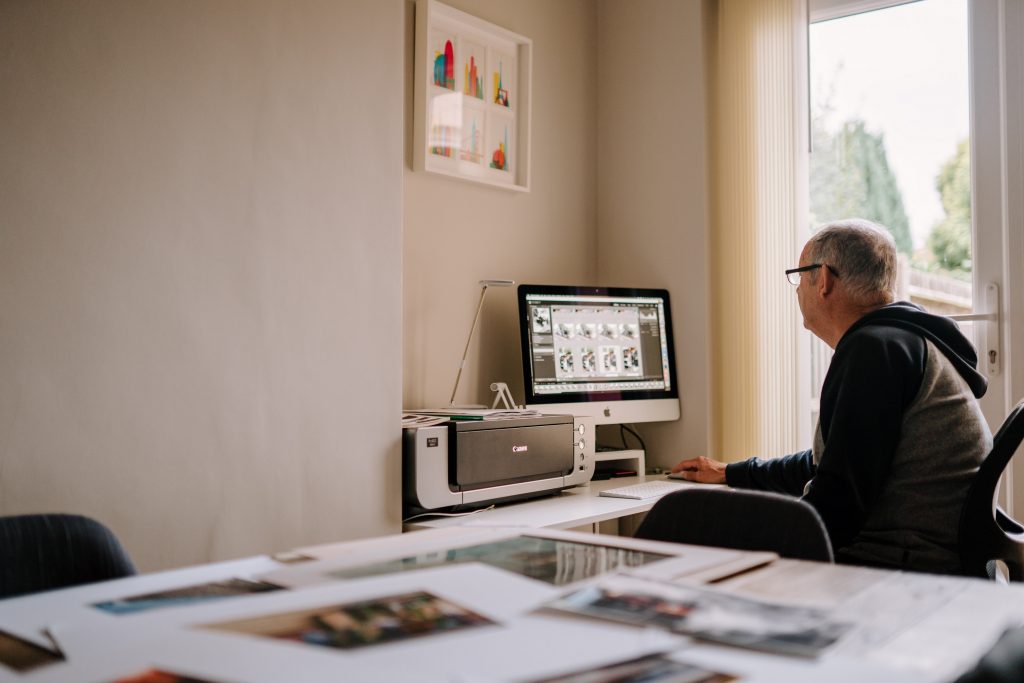
The Solution
Symptoms of computer vision syndrome can be addressed depending on the particular cause that is affecting you, whether it is an environmental factor you (or your employer) can improve, or it is something that you can implement to reduce the discomfort (such as taking regular breaks).
Simon is able to perform a binocular vision function assessment to provide you with a plan and solution so that you can continue your device usage (whether it is at work or at home) while understanding the appropriate times to take breaks, what spectacles you may or may not require, and what viewing distances are optimal for your eyes and posture.

Lenses with Blue Light Filter
You may have have heard or seen advertising for lenses that have a blue-light blocking coating which reduces eyestrain, alleviates headaches, and improves sleep.
Blue-light filter lenses have been marketed that way based on theoretical assumptions that blue wavelength light can be damaging to eye health and lead to eyestrain.
One study from the Journal of Applied Psychology determined through questionnaires that these blue-light filtering lenses “can help” people “live and work better.”
Two systematic reviews (from Ophthalmic and Physiological Optics and Seminars in Ophthalmology) determined that there was a lack of evidence for prescribing blue-light filter spectacles in practice.
Although Simon would not usually recommend the use of blue-light blocking lenses, individuals who have used these products successfully previously can be supplied blue-light filter spectacle lenses through well-known, high quality lens manufacturers.